
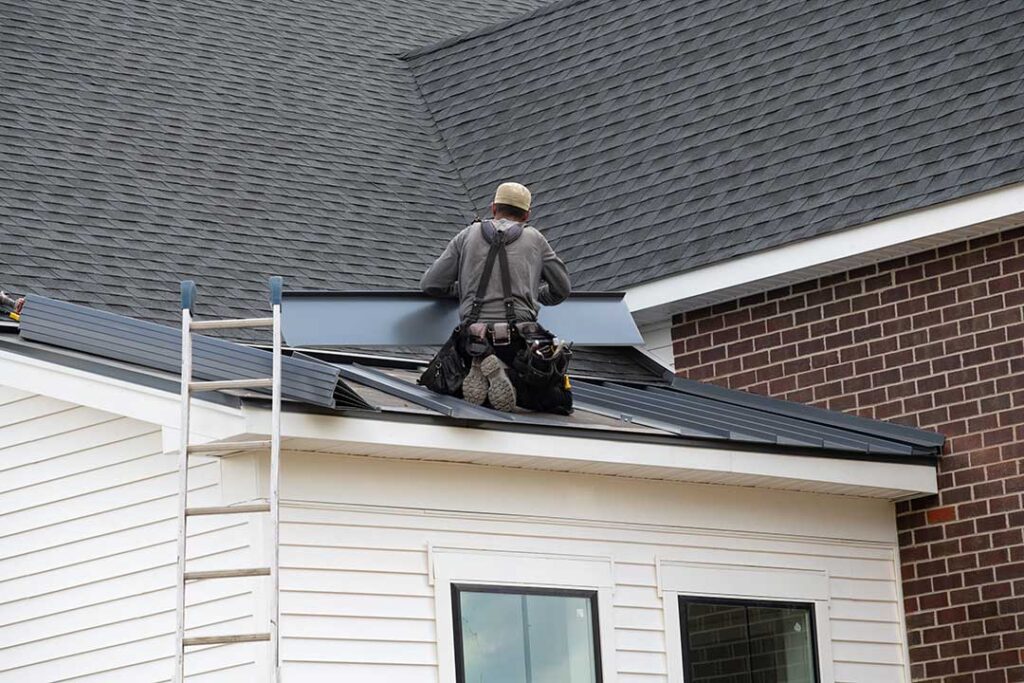
Roofing work is a sequence of inspections, planning, preparation, installation, and cleanup—not simply the replacement of visible shingles. For homeowners in Delmar, NY, understanding each stage makes it easier to recognize normal progress, ask useful questions, and identify problems that deserve attention.
What happens before roofing work begins?
The process usually starts with an evaluation of the existing roof, attic, and drainage system. The goal is to determine whether the problem involves only worn roofing materials or whether moisture has affected the underlying structure.
An inspection may consider:
- Shingle condition, including curling, cracking, missing areas, or excessive granule loss
- Flashing around chimneys, roof edges, walls, vents, and other penetrations
- Valleys where roof sections meet and water runoff is concentrated
- Gutters, downspouts, and the lower roof edges
- Attic ventilation, insulation, daylight, staining, and dampness
- Sagging roof planes or areas that feel soft beneath the roofing surface
A roof can appear acceptable from the ground while still having problems around flashing or in the attic. Conversely, a few missing shingles do not always mean that the entire roof has reached the end of its useful life.
The age and history of the roof also matter. Previous repairs, storm damage, layers of older roofing, and long-term ventilation problems can affect the recommended approach.
How is the roofing project planned?
Planning determines the scope of work, materials, timing, site protection, and disposal requirements. A written scope should explain what will be removed, what will be repaired, and what will be installed.
Important planning details include:
- Whether existing roofing materials will be removed or whether another layer can remain
- The condition of the roof deck beneath the shingles
- Replacement of damaged wood or other structural components
- The type and location of underlayment
- Flashing details around roof penetrations and wall intersections
- Ventilation improvements, if needed
- Protection for landscaping, siding, windows, driveways, and outdoor equipment
- How removed materials and nails will be collected
In older homes, the roof design may include additions, multiple roof slopes, enclosed porches, or repairs completed at different times. These features can make water movement less obvious and may require more careful detailing than a simple roof plane.
Permit or inspection requirements can vary according to the work being performed and applicable local rules. Homeowners should verify requirements before work begins, especially when repairs involve structural changes, substantial reconstruction, or modifications to drainage and ventilation.
What happens during tear-off?
Tear-off is the removal of old roofing materials. It may include shingles, underlayment, flashing, ventilation components, and damaged sections of roof decking.
During this stage, the roof deck becomes visible. This is often when hidden conditions are discovered. Common examples include:
- Soft or deteriorated wood caused by prolonged moisture
- Nail holes and gaps around old flashing
- Areas weakened by repeated leaks
- Improperly installed previous repairs
- Inadequate ventilation openings
- Multiple roofing layers that were not visible from outside
Some deck damage can be localized, while extensive deterioration may indicate that water has been entering for a long time. Replacing damaged decking is not merely cosmetic; the deck supports the roofing system and provides the surface to which materials are attached.
Tear-off also creates noise, falling debris, and temporary exposure to weather. Roofing work is therefore scheduled around reasonable weather conditions, with temporary protection used if the roof cannot be completed in one day.
How is the roof prepared for new materials?
Preparation is one of the most important parts of the process because many long-term problems begin beneath the visible roofing surface.
The roof deck should be reasonably sound, clean, and properly fastened. Underlayment is then installed to provide an additional water-shedding layer beneath the outer roofing material. In areas where ice, snow, and freeze-thaw cycles are concerns, additional protection may be used along vulnerable roof edges and valleys, according to applicable building practices.
Flashing is installed or replaced wherever water could collect or move between different surfaces. This commonly includes:
- Valleys
- Chimneys
- Plumbing vents
- Skylights
- Wall intersections
- Sidewalls and headwalls
- Eaves and rakes

Roof ventilation must also be considered. Ventilation is intended to allow controlled air movement through the attic, helping manage heat and moisture. Adding vents without providing a balanced intake path may not solve the underlying problem. Likewise, ventilation cannot correct a roof leak or replace adequate attic insulation.
How are shingles or other roof coverings installed?
The outer roofing material is installed according to the design of the roof and the manufacturer’s specifications. With asphalt shingles, installation generally begins at the lower edge and proceeds upward in overlapping courses. Special components are used at eaves, valleys, ridges, and penetrations.
Proper installation depends on details such as:
- Correct alignment and exposure
- Appropriate fastener placement
- Secure treatment of edges and ridges
- Proper integration with flashing
- Careful cutting around vents and other penetrations
- Adequate sealing where required
- Compatibility between roofing materials and accessories
The visible surface is only one part of the system. A roof can look uniform while still having weak flashing, poor fastening, or inadequate water-shedding details. Conversely, minor visual variations may result from normal material patterns or lighting and do not necessarily indicate a defect.
Cold weather can affect how roofing materials seal and handle. Scheduling decisions may therefore depend on temperature, wind, precipitation, and the type of material being installed.
What happens around chimneys, vents, and roof edges?
Roof penetrations and transitions require special attention because they interrupt the continuous plane of the roof. Water often enters around these areas rather than through the middle of an otherwise intact shingle field.
Chimney flashing may include several interlocking pieces that direct water around the masonry. Plumbing vents need properly fitted flashing boots. Valleys must be shaped and layered so runoff can pass without backing up beneath the roofing material.
At the roof edge, drip-edge components help direct water away from the deck and into the drainage system. Gutters should not be used to hide problems with roof-edge construction, and clogged or poorly positioned gutters can contribute to water damage at fascia boards, soffits, and foundation areas.
How is the job checked and cleaned up?
A thorough final review examines both the roof and the surrounding property. The roof should be checked for loose materials, exposed fasteners, incomplete flashing, damaged shingles, and debris in valleys or gutters.
Cleanup should include removal of discarded materials and collection of loose nails from accessible areas. Because nails and fragments can travel beyond the immediate work zone, pathways, driveways, lawn edges, and areas near entrances deserve attention.
Homeowners may also inspect the attic after the work is complete, particularly if the project addressed a leak. New staining does not always mean active leakage because old moisture marks can remain, but fresh dampness, dripping, or a persistent musty odor warrants further investigation.
What should homeowners expect after the roof is finished?
A newly completed roof may show small amounts of loose granules in gutters, minor surface variation, or sealant that takes time to fully set. These conditions are not automatically signs of failure.
Residents should monitor the roof after the first periods of heavy rain, strong wind, or rapid temperature changes. Useful observations include:
- Water stains appearing or expanding in the attic
- Damp insulation or wet roof decking
- Missing, lifted, or visibly damaged materials
- Overflowing gutters or drainage changes
- New leaks around chimneys, vents, or skylights
- Shingles or metal components found on the ground
Delmar’s seasonal pattern of snow, ice, rain, wind, and freeze-thaw movement makes drainage and flashing especially significant. Keeping gutters clear, trimming branches that rub against roofing, and checking the attic periodically can help reveal small problems before they become larger repairs. Walking on the roof is generally unsafe and can damage roofing materials, so roof observations are best made from the ground, attic, or another safe vantage point.
