
Sports balls can damage roofing materials even when the impact seems minor. A baseball, lacrosse ball, soccer ball, or other hard projectile may crack a shingle, loosen a flashing edge, dent metal, or create a weak spot that later allows water to enter.
For households in Delmar, NY, the risk is most common where homes border driveways, yards, school activity areas, parks, or informal play spaces. Damage may not cause an immediate leak, which makes early inspection useful after a hard impact.
Which sports balls are most likely to damage a roof?
Hard, fast-moving balls create the greatest risk. Baseballs, lacrosse balls, field hockey balls, golf balls, and some dense practice balls can deliver enough force to fracture or displace roofing materials. A wet or cold ball may also behave differently than a soft, lightweight playground ball.
The potential for damage depends on several factors:
- The hardness, size, and weight of the ball
- How fast it was traveling
- The angle of impact
- Whether it struck a flat roof surface, a roof edge, or a projecting component
- The age and condition of the roofing materials
- The outdoor temperature and recent weather conditions
A shingle that is already brittle or weakened may break under an impact that would not affect newer material. Older asphalt shingles can become less flexible after years of sun exposure, repeated freezing, and seasonal temperature changes.
What parts of a roof can a ball damage?
The most visible damage often appears on shingles, but a roof includes several layers and components that may be affected.
Asphalt shingles
A direct hit can crack a shingle, remove surface granules, or create a depression. Granules protect the asphalt layer from sunlight and weathering. If they are knocked loose, the exposed area may age more quickly.
A ball can also break the sealing strip that helps hold shingles together. If a shingle edge lifts after the impact, wind may catch it and worsen the damage.
Ridge caps and roof edges
Roof edges and ridge caps can be more vulnerable because they are raised above the surrounding surface. A hit may split a cap shingle, loosen a nail, or move a piece out of alignment.
Flashing
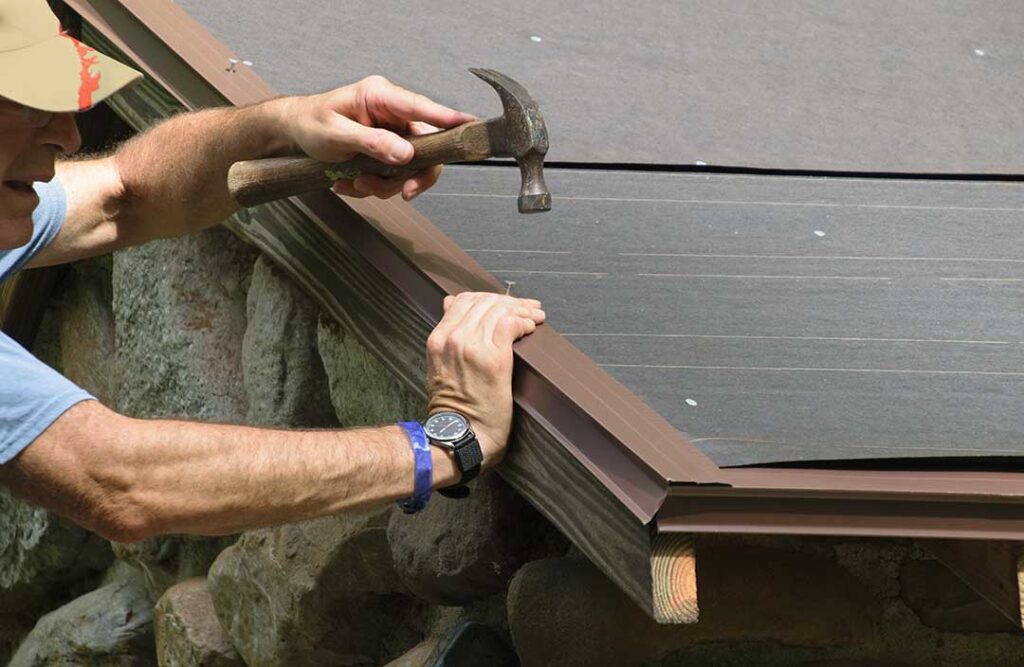
Flashing is the metal or weather-resistant material installed around chimneys, vents, skylights, walls, and roof transitions. A strong impact may bend or puncture it. Because flashing directs water away from openings, even a small defect can become significant during heavy rain or melting snow.
Gutters and downspouts
A ball that misses the roof may strike a gutter or downspout. Dents, separated joints, and loose fasteners can interfere with drainage. Water may then spill against siding, trim, foundation areas, or walkways.
Roof vents and other penetrations
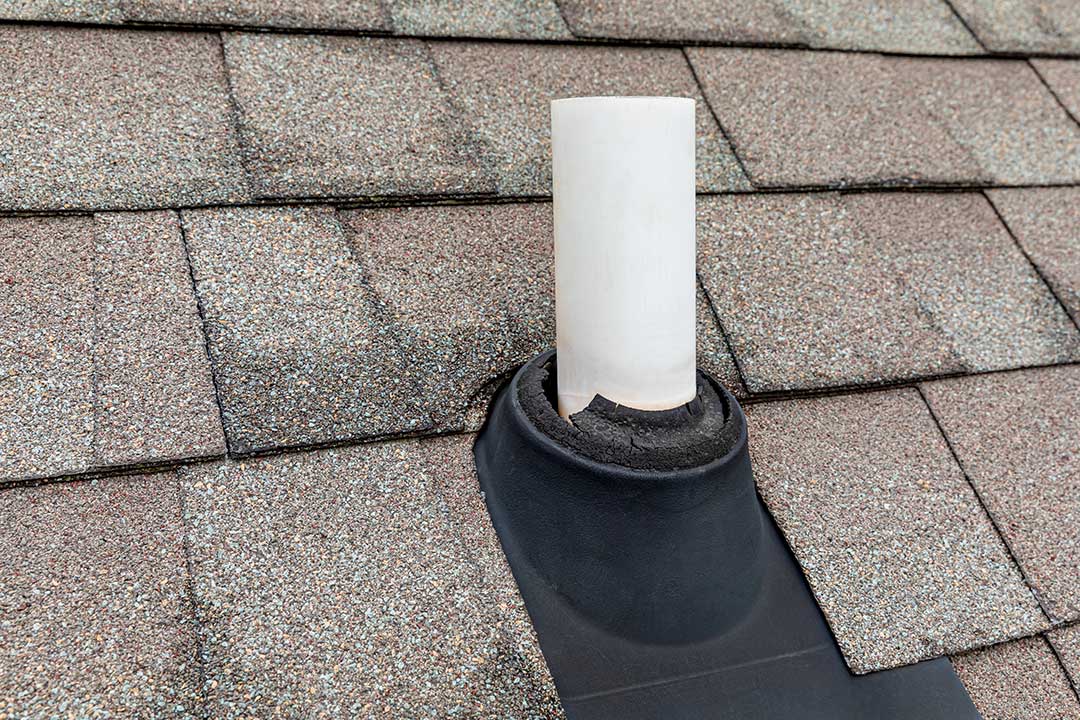
Plastic vent covers, pipe boots, and similar components can crack or shift. A damaged vent may allow water into the roof assembly or attic, even if the shingles nearby appear undisturbed.
What does sports-ball roof damage look like?
Some damage is obvious, but other signs are easy to overlook from the ground. After a hard impact, look for:
- A shingle that is cracked, torn, curled, or missing
- A dark or exposed patch where granules have been removed
- Loose shingle pieces in the yard or gutter
- A dented or bent metal flashing component
- A cracked vent cover or pipe boot
- Granules collecting in gutters or at the base of downspouts
- A new ceiling stain, damp attic insulation, or musty odor
- Daylight visible through a roof-related opening in the attic
A circular dent or impact mark does not always mean the roof is leaking. However, it can indicate that the protective surface has been compromised. Water may enter later, especially after wind-driven rain, snow accumulation, or repeated freeze-thaw cycles.
Can a roof be damaged without leaking immediately?
Yes. A roof can sustain impact damage without producing an immediate interior symptom. Water may travel beneath shingles before reaching the attic or ceiling, and some openings only admit water during particular wind directions.
A small fracture may also expand as materials contract and expand through changing temperatures. In Delmar, seasonal weather can subject roofing systems to summer heat, winter cold, rain, snow, and ice. A defect that appears harmless in dry weather may become a leak during a later storm.
For that reason, checking the roof and attic after a serious impact is more reliable than waiting for a ceiling stain.
Is a small dent or missing granules a serious problem?
The answer depends on the location and extent of the damage. A few loose granules may be cosmetic, while a cracked shingle, exposed underlayment, or damaged flashing can reduce the roof’s ability to resist water.
Damage deserves closer attention when it is:
- Near a roof penetration, valley, edge, or wall transition
- Repeated across several shingles
- Associated with loose material
- Located where water naturally flows
- Accompanied by attic moisture or interior staining
- Combined with strong winds or heavy rain after the impact
A roof may remain functional after a single damaged shingle, but the affected area should not be ignored. Temporary covering or repairs may be necessary if rain is expected and an opening is visible.
Can homeowners inspect the roof safely?
A ground-level inspection is usually the safest first step. Binoculars can help identify displaced shingles, dents, and missing pieces without requiring ladder or roof access.
Inside the home, inspect the attic if it is accessible and safe. Look for damp insulation, darkened wood, water droplets, or stains near the area that may have been struck. Check ceilings and upper walls for new discoloration.
Walking on a roof can damage shingles and create fall hazards, particularly when the surface is wet, icy, steep, or covered with debris. Ladder use also becomes more dangerous near overhead wires, unstable ground, or roof edges. Hazardous conditions should be left to someone properly equipped and trained to evaluate them.
What should happen after a ball hits the roof?
First, note where the impact occurred and whether any pieces are on the ground. Take photographs from a safe location before weather changes the appearance of the damage.
If there is an active leak, place a container beneath the drip and move belongings away from the affected area. Do not seal a wet ceiling opening or climb onto a slippery roof to make an improvised repair.
If no leak is visible, continue checking the attic and ceilings during the next rain. A damaged shingle or roof component may need timely repair even when the interior remains dry.
How can repeated ball impacts be prevented?
Prevention is easier when the play area and roof are separated. Useful steps include:
- Directing throwing and batting activities away from the house
- Using softer practice balls near buildings
- Placing targets in an open part of the yard
- Avoiding roof-adjacent play during windy conditions
- Keeping ladders, sheds, and other climbable objects away from areas where children may reach the roof
- Replacing vulnerable or damaged components before they become loose
Trees, fences, and nearby structures can change the direction of a ball, so a play area that seems safely positioned may still produce unexpected impacts.
Sports-ball damage is usually localized, but it can affect the roof’s water-shedding system. A careful ground inspection, an attic check, and prompt attention to cracked or displaced materials can help prevent a small impact from becoming a larger moisture problem.
